Signed in as:
filler@godaddy.com
We believe in creating meaningful experiences that inspire and connect. Let us help you bring your vision to life.

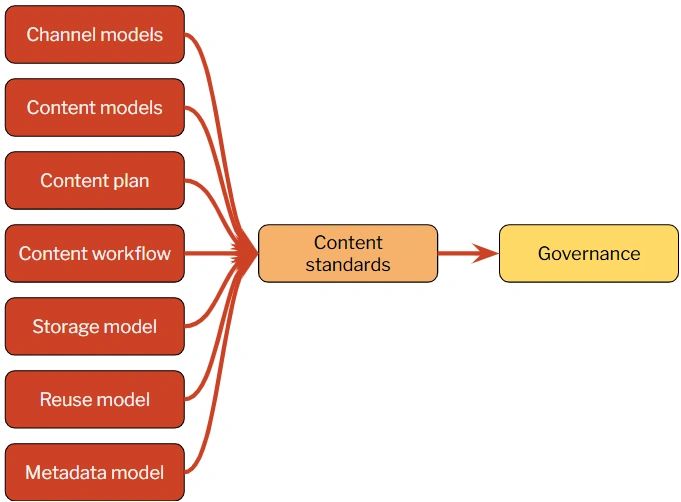
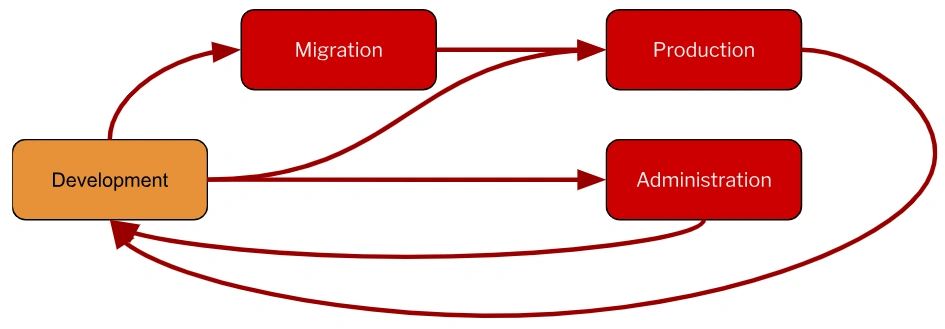
This diagram shows a high level flow for how each part should be developed. As we look into each part, we will see closer relationships between each part.
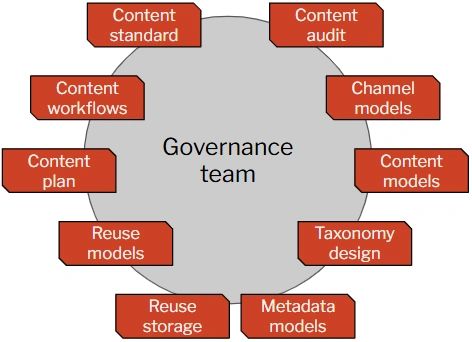
The governance part of the KM ecosystem determines how changes are made to the ecosystem. This includes deciding when changes happen, the steps for reviewing and approving those changes, and who is responsible for making decisions and carrying out the related actions.

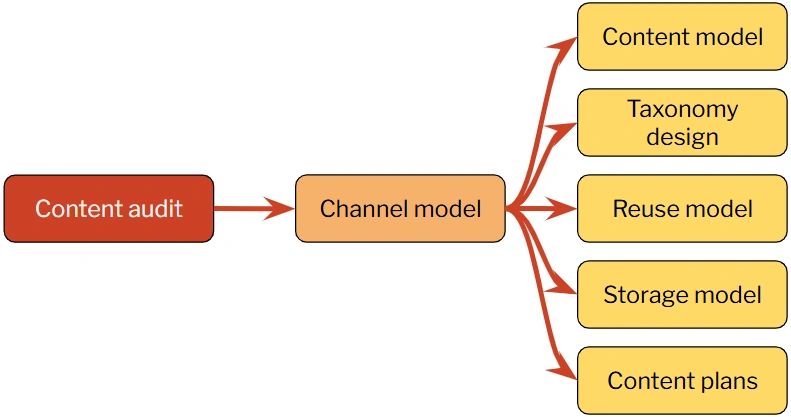
A content audit tells you what content you have in your knowledge ecosystem, at a scale that is meaningful and useful to you.
The audit also tells you important information about that content, such as when it was made, who made it, and if there are any similar or duplicate pieces of content.
Channels are a space that content appears in.
Users access the content from that space and so you need channels designed with the user in mind.
Each channel model defines the attributes and associated values for each of your channels. Your knowledge management ecosystem is likely to have more than one channel.
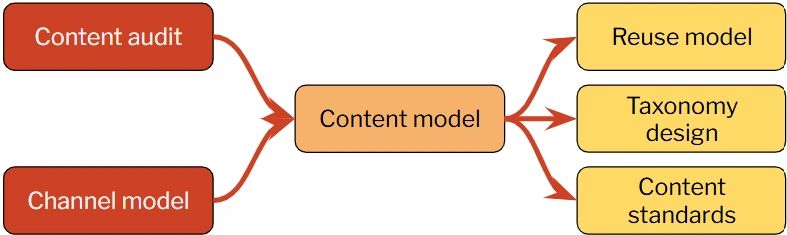
A content model defines all of the parts you use to make content in your knowledge ecosystem.
At the most basic level, consider the grammatical structure of language. In English, a sentence typically includes a subject and a predicate. You can build on that using the rules of the English language, including phrases and paragraphs, to assemble complex language structures. Going beyond that, you look at collections of paragraphs to build sections of content, then chapters, and entire publications or similar collections of content.
You can then add in different types of content such as images, animations, videos, and audio. When taken as a whole, your content model defines all rules that apply to your entire content set.
Your writers use the content model to know how to assemble the content, while systems, such as AI chatbots, use the content model as part of their instructions on how to interpret the content.
A taxonomy design is a blueprint for how you want to categorize your content. It defines a hierarchy of categories built around a set of root characteristics, with each category having its own criteria. These are critical for defining your metadata model.

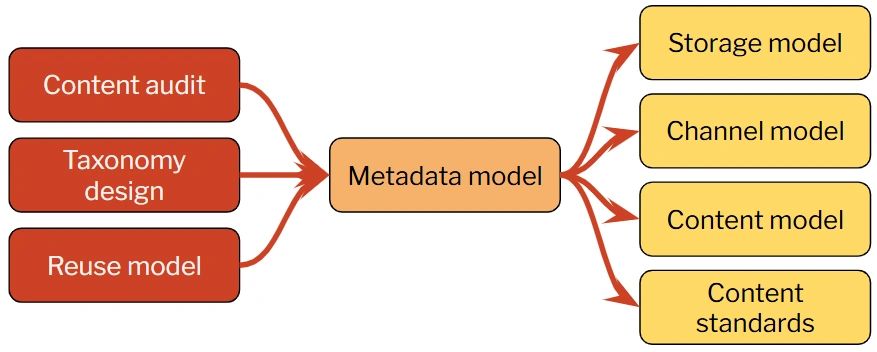
When you completed your content audit, you saw many characteristics about your documents. These included Created Date, Last Modified Date, Created by, Modified by, and many others. Likewise, if your content model was based on existing standards such as DITA or Docbook, you saw that all of the elements had attributes. These are examples of metadata.
Your metadata model defines the attributes and associated values that your content team uses to assign and manage metadata assigned to your content. For system related values, your metadata model needs to be based on how your system tracks and uses the metadata. For attributes, your metadata model shows attributes and values based on the practical application of your taxonomy design.
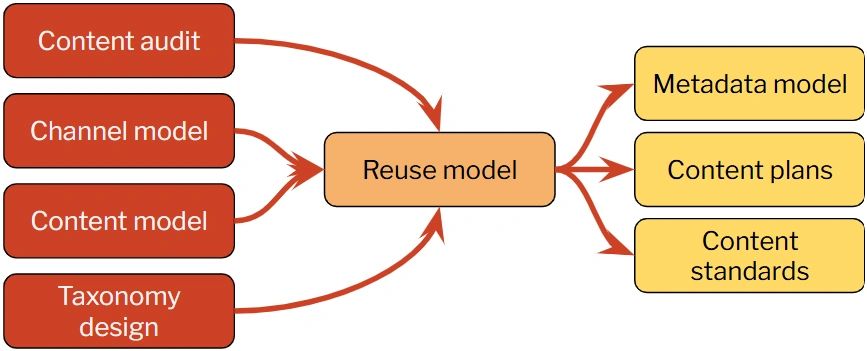
A reuse model defines the rules that systems and members of the content team must follow to reuse content in your knowledge ecosystem.
Consider a sentence or paragraph that may appear in multiple chapters of a book or pages in a web site.
The simplest approach will be to copy that content into each chapter or page. Although inefficient and difficult to maintain, this is a basic form of content reuse. A more powerful approach would be to use references to reuse the content in multiple outputs.
Ideally, that type of reuse should be done intentionally. The reuse model is the set of rules that tells your authors about this intent.

Content storage is where you put your content. This includes content you are working on and where you host your published content.
Sometimes this is a simple folder system, but more mature knowledge ecosystems use content management systems and hosting solutions to properly manage where content is, how it is managed, and who has access to it.
A content plan is a reusable template that your content team can use for deciding what content your content team needs to work on.
It combines audience analysis, content goal setting, and information requirements analysis in a combined planning environment.
It also identifies which channels the content should be published to.
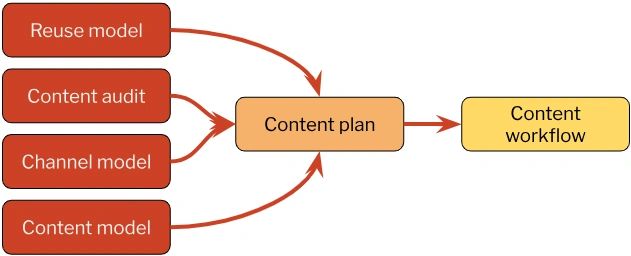

Creating and updating content is not just about someone opening their editor and creating something. The work requires a start, middle and finish.
The work needs to achieve a measurable goal and people need to know what they are supposed to do. That is why content teams need content workflows.
The content workflow defines the rules that the content team follows when working on content.
This includes the event that triggers the workflow to start, the actions that happen during the workflow and who performs those actions, and how the workflow ends.
There is an old saying that goes “If you didn’t write it down, it didn’t happen”. That is probably the most important part to consider when putting together your content standards.
All of the work you have done so far in establishing your best practices will mean nothing if you don’t put it in a form that your content team will use.
Your content standard is the documented decision of all the work you have done to date, with content style on top. Your content team uses the content standard to know how to apply your best practices and create content that meets the needs of your organization.